---
title: JMIR Publications Blog | Research News
description: Research News | Blog posts, white papers and rich media content dedicated to researchers, authors, librarians, institutions, funders in academic and scholarly publishing
---
[](http://www.jmirpublications.com)
Open main menu Close main menu
# JMIR Publications
# Newsroom
Select Category Aging Artificial Intelligence Digital Psychiatry Early Career Researcher Events Industry News JMIR News Libraries Open Access Peer Review Research News Women in Science
Posts about:
## Research News

[Research News](https://blog.jmir.org/tag/research-news)
### [Body Image and Eating Disorder Education Chatbot JEM Shows High Real-World Satisfaction](https://blog.jmir.org/body-image-and-eating-disorder-education-chatbot-jem-shows-high-real-world-satisfaction)
21 October 2026 9:00 a.m.
Body image dissatisfaction and eating disorders pose growing public health challenges globally, yet stigmatization and lack of accessible services prevent many affected individuals from seeking timely help. To address this support gap, researchers co-designed JEM, a rule-based conversational agent delivering evidence-based psychoeducation and psychotherapeutic microinterventions targeting cognitive and emotional processing.

[Liana Ramos, Marketing Associate](https://blog.jmir.org/author/liana-ramos)
[Read More](https://blog.jmir.org/body-image-and-eating-disorder-education-chatbot-jem-shows-high-real-world-satisfaction)

[Research News,](https://blog.jmir.org/tag/research-news) [Artificial Intelligence](https://blog.jmir.org/tag/artificial-intelligence)
### [Beyond Prediction: Bertalan Meskó on Shaping the Future of Medicine](https://blog.jmir.org/beyond-prediction-bertalan-meskó-on-shaping-the-future-of-medicine)
15 October 2026 10:43 a.m.
How can healthcare move beyond reacting to change and start preparing for what’s next? In this interview, [Dr. Bertalan Meskó, MD, PhD](https://www.linkedin.com/in/bertalanmesko/), guest editor of the *[Journal of Medical Internet Research](https://www.jmir.org/)* theme issue “[The Emergence of Medical Futures Studies](https://www.jmir.org/themes/1638/2026-theme-issue-2024-the-emergence-of-medical-futures-studies),” shares how futures methods can help shape a more intentional future for medicine.

[Isabella Hernandez](https://blog.jmir.org/author/isabella-hernandez)
[Read More](https://blog.jmir.org/beyond-prediction-bertalan-meskó-on-shaping-the-future-of-medicine)

[Research News](https://blog.jmir.org/tag/research-news)
### [Integrating Patient-Generated Health Data: Expanded 10-Stage Workflow for Shared Decision-Making](https://blog.jmir.org/integrating-patient-generated-health-data-expanded-10-stage-workflow-for-shared-decision-making)
14 October 2026 9:41 a.m.
With consumer wearables, smartphones, and remote monitoring devices becoming mainstream, patient-generated health data (PGHD) offers a continuous lens into daily living. However, translating raw tracking data into actionable clinical insights during time-constrained consultations presents significant challenges for both patients and healthcare providers.

[Liana Ramos, Marketing Associate](https://blog.jmir.org/author/liana-ramos)
[Read More](https://blog.jmir.org/integrating-patient-generated-health-data-expanded-10-stage-workflow-for-shared-decision-making)
[Research News](https://blog.jmir.org/tag/research-news)
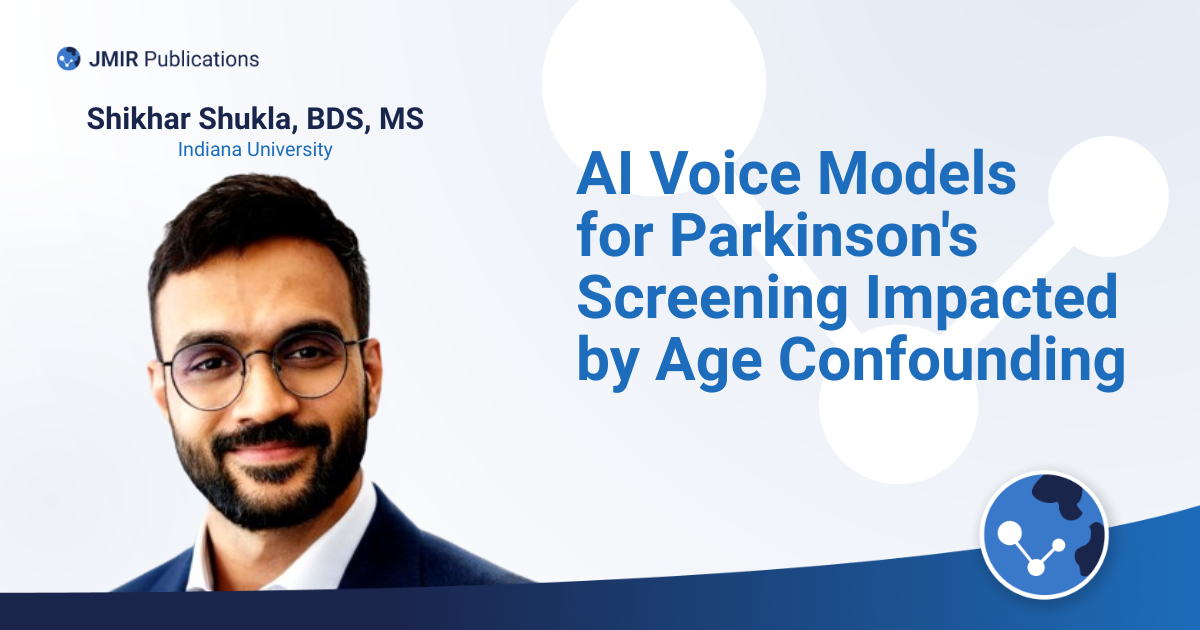
### [AI Voice Models for Parkinson's Screening Impacted by Age Confounding](https://blog.jmir.org/ai-voice-models-for-parkinsons-screening-impacted-by-age-confounding)
7 October 2026 9:04 a.m.
Voice-based artificial intelligence models have generated significant interest for noninvasive screening of neurological conditions like Parkinson's disease and dementia. However, high classification performance in these models may be driven by age differences between study groups rather than true disease signatures.

[Liana Ramos, Marketing Associate](https://blog.jmir.org/author/liana-ramos)
[Read More](https://blog.jmir.org/ai-voice-models-for-parkinsons-screening-impacted-by-age-confounding)
[Research News](https://blog.jmir.org/tag/research-news)
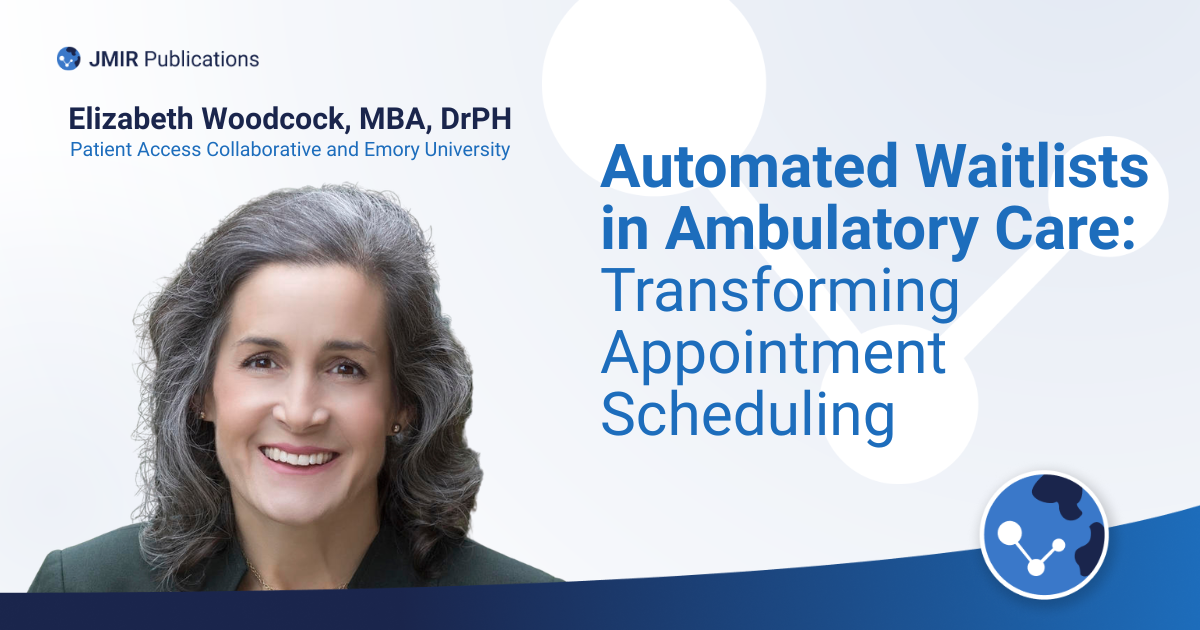
### [Automated Waitlists in Ambulatory Care: Transforming Appointment Scheduling](https://blog.jmir.org/automated-waitlists-in-ambulatory-care-transforming-appointment-scheduling)
30 September 2026 9:00 a.m.
Delays in accessing ambulatory care create significant operational strain for health systems and lead to adverse outcomes and diminished experiences for patients. While manual waitlists are resource-intensive and difficult to scale, automated waitlists leverage technology to monitor schedules continuously and send automated notifications to patients when earlier slots open up.

[Liana Ramos, Marketing Associate](https://blog.jmir.org/author/liana-ramos)
[Read More](https://blog.jmir.org/automated-waitlists-in-ambulatory-care-transforming-appointment-scheduling)

[Research News,](https://blog.jmir.org/tag/research-news) [Aging](https://blog.jmir.org/tag/aging)
### [Bridging Generational Divides Through Gamified Dialogue](https://blog.jmir.org/bridging-generational-divides-through-gamified-dialogue-insights-from-professor-eliza-wong)
25 September 2026 9:30 a.m.
---
In the fourth and final blog entry of our Healthy Aging® Month series, Eliza Wong, PhD from the Jockey Club School of Public Health and Primary Care at [The Chinese University of Hong Kong](https://www.cuhk.edu.hk/english/index.html) shares insights from her team’s latest research published in JMIR Aging.

[Jane Kelly, Integrated Marketing Manager](https://blog.jmir.org/author/jane-kelly)
[Read More](https://blog.jmir.org/bridging-generational-divides-through-gamified-dialogue-insights-from-professor-eliza-wong)
[Research News,](https://blog.jmir.org/tag/research-news) [Aging](https://blog.jmir.org/tag/aging)
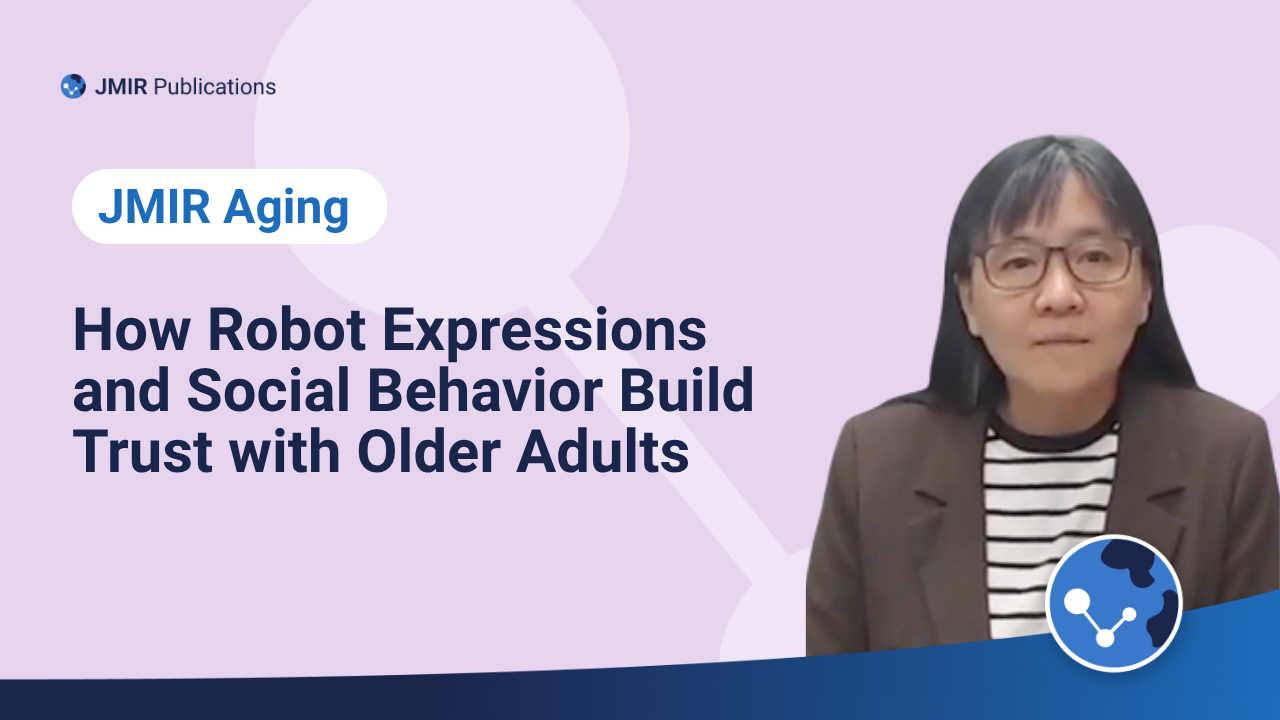
### [Building Trust and Rapport With Social Robots: Insights From Professor Hsiu-Ping Yueh](https://blog.jmir.org/building-trust-and-rapport-with-social-robots-insights-from-professor-hsiu-ping-yueh)
24 September 2026 11:00 a.m.
---
In the third post for our Healthy Aging® Month video series, Hsiu-Ping Yueh, PhD from[National Taiwan University](https://www.ntu.edu.tw/english/) gives an overview of her team’s research published in [*JMIR Aging*](https://aging.jmir.org/). Joining her in the video are two Kebbi social robots, her "co-stars" in studying how technology can tackle social isolation in older adults.

[Jane Kelly, Integrated Marketing Manager](https://blog.jmir.org/author/jane-kelly)
[Read More](https://blog.jmir.org/building-trust-and-rapport-with-social-robots-insights-from-professor-hsiu-ping-yueh)
[Research News,](https://blog.jmir.org/tag/research-news) [Aging](https://blog.jmir.org/tag/aging)
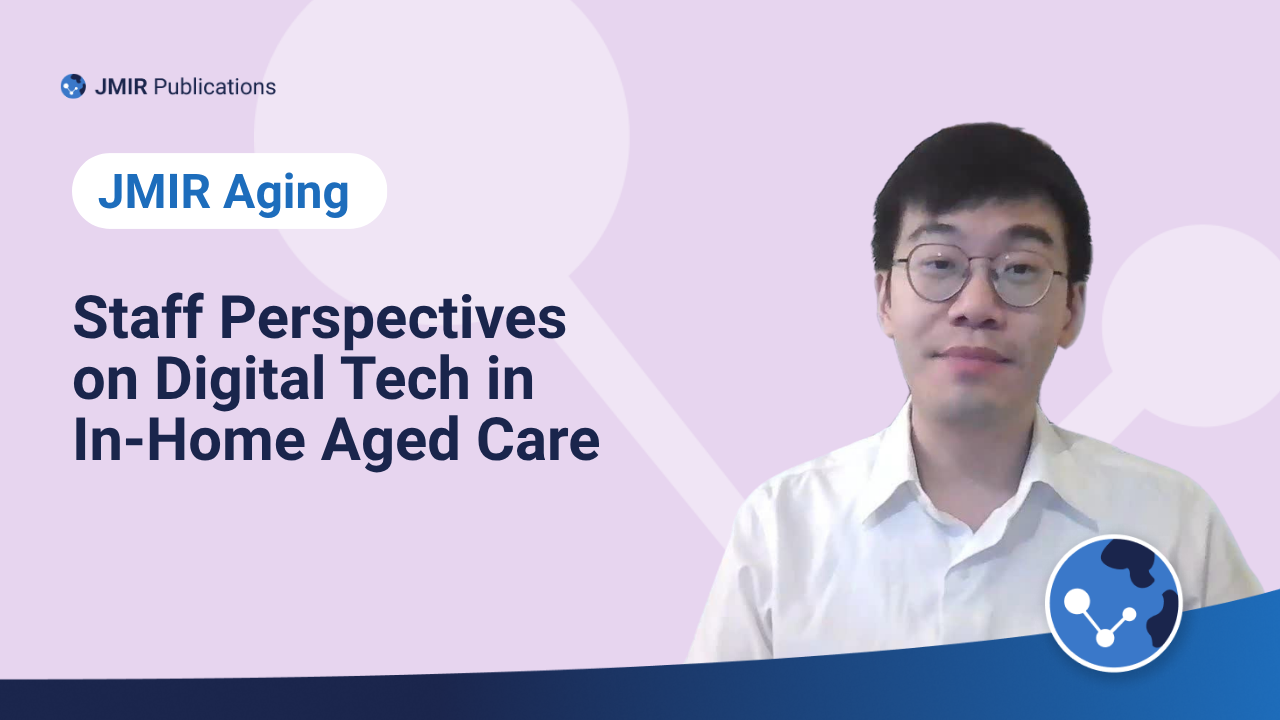
### [Supporting Frontline Aged Care Workers to Transform In-Home Services](https://blog.jmir.org/empowering-in-home-care-workers-through-technology-insights-from-baldwin-kwan)
23 September 2026 4:50 p.m.
In the second installment of our Healthy Aging® Month series, Baldwin Pok Man Kwan, MPH; a physiotherapist and project officer at [Silverchain](https://silverchain.org.au/), shares insights from his team's recent research published in [JMIR Aging.](https://aging.jmir.org/)

[Jane Kelly, Integrated Marketing Manager](https://blog.jmir.org/author/jane-kelly)
[Read More](https://blog.jmir.org/empowering-in-home-care-workers-through-technology-insights-from-baldwin-kwan)
[Research News,](https://blog.jmir.org/tag/research-news) [Aging](https://blog.jmir.org/tag/aging)
### [Empowering Active Aging Through Co-Designed Digital Tools](https://blog.jmir.org/supporting-frontline-aged-care-workers-to-transform-in-home-services)
23 September 2026 8:47 a.m.
---
This September for Healthy Aging® Month, [*JMIR Aging*](https://aging.jmir.org/) is bringing peer-reviewed science off the page and into daily life. We are spotlighting four articles and their lead authors in a dedicated video series that illustrates the direct connection between academic research and real-world impact. Each feature demonstrates how evidence-based digital health solutions are moving beyond theoretical design to actively empower older adults, caregivers, and technology developers, showing how digital tools can foster independence, purpose, and vitality in everyday living. In our first video feature for the series, Anna Whittaker, PhD from the [University of Stirling](https://www.stir.ac.uk/) shares key insights from her research published in JMIR Aging.

[Jane Kelly, Integrated Marketing Manager](https://blog.jmir.org/author/jane-kelly)
[Read More](https://blog.jmir.org/supporting-frontline-aged-care-workers-to-transform-in-home-services)
.png)
[Research News](https://blog.jmir.org/tag/research-news)
### [Physical Activity Research in Black and African American Women: Methodological Insights](https://blog.jmir.org/physical-activity-research-in-black-and-african-american-women-methodological-insights)
9 September 2026 9:00 a.m.
African American and Black women report the lowest physical activity levels across demographic groups in the United States, driving elevated rates of preventable cardiometabolic diseases. While researchers increasingly turn to mixed methods to examine how social, cultural, and environmental factors shape exercise behaviors, how effectively are these quantitative and qualitative insights being combined?

[Liana Ramos, Marketing Associate](https://blog.jmir.org/author/liana-ramos)
[Read More](https://blog.jmir.org/physical-activity-research-in-black-and-african-american-women-methodological-insights)
[1](https://blog.jmir.org/tag/research-news) [2](https://blog.jmir.org/tag/research-news/page/2) [3](https://blog.jmir.org/tag/research-news/page/3) [4](https://blog.jmir.org/tag/research-news/page/4) [5](https://blog.jmir.org/tag/research-news/page/5)
© 2026 JMIR Publications