

In the fourth and final blog entry of our Healthy Aging® Month series, Eliza Wong, PhD from the Jockey Club School of Public Health and Primary Care at The Chinese University of Hong Kong shares insights from her team’s latest research published in JMIR Aging.
| Key Takeaways |
| Focus on Conversation Quality: Structured skills—listening, observing, understanding, and expressing—matter more than simple contact between generations. |
| Gamification Bridges Divides: Tabletop gameplay creates a low-stress space that breaks down age stereotypes and builds cross-generational trust. |
| Empowers Older Adults: Guided communication games boost self-reported communication skills, health literacy, and confidence most in older players. |
In her video reflection, Professor Wong addresses the growing global challenge of social isolation among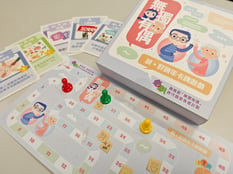 older adults, often exacerbated by changing family structures and reduced opportunities for face-to-face contact. She emphasizes that simply bringing different generations together isn't enough—the quality of the interaction is what truly matters. To address this, her team created the Healthy Aging in Dialogue Tabletop Game, a gamified intervention built on four core communication skills: listening, observing, understanding, and expressing (the LOUE framework). Professor Wong highlights how this card game creates a comfortable, structured environment where players can share experiences, challenge age stereotypes, and build mutual understanding.
Evaluating the Power of the "Healthy Aging in Dialogue" Tabletop Game
Professor Wong’s video draws directly from a mixed-methods study published in JMIR Aging, titled "Evaluation of a Gamification-Based Intervention to Enhance Intergenerational Communication: Pre-Post Mixed Methods Evaluation". The research evaluated 68 participants across three age cohorts, young adults (18–39), middle-aged adults (40–64), and older adults (65+), as they engaged in structured gameplay featuring mission cards focused on life values, health literacy, and social connection.
The evaluation revealed notable benefits across all generations, with marked improvements in communication satisfaction (Cohen d=0.745) and health literacy (Cohen d=0.409). Across qualitative feedback, participants reported that the game made conversations feel far easier, more relaxed, and more meaningful than typical cross-generational interactions.
Disproportionate Empowerment for Older Adults
While players of all ages enjoyed the experience, the intervention delivered particularly striking gains for older participants. Older adults showed statistically significant improvements in self-reported communication competence and achieved significantly higher patient enablement scores compared to younger cohorts.
These findings suggest that by offering an inclusive, non-judgmental environment where older adults feel heard and valued, the game directly bolsters their confidence and agency. By providing a scalable, low-cost tool that bridges generation gaps and promotes health literacy, the study demonstrates how simple, playful interventions can effectively combat social isolation and foster active, connected communities worldwide.
| Eliza Lai-Yi Wong discusses a mixed-methods evaluation of the "Healthy Aging in Dialogue Tabletop Game." |
Celebrating the Future of Healthy Aging With JMIR Aging
As our Healthy Aging® Month video series comes to a close, we want to send a huge thank you to all the authors, researchers, and participants who shared their incredible work with us! From developer toolkits and frontline care tools to social robotics and tabletop games, this month’s features prove that digital health is at its best when it puts human connection, dignity, and real-life impact first.
We're also thrilled to announce that the JMIR Publications team will be attending the Gerontological Society of America (GSA) Annual Scientific Meeting this November for the very first time, we can’t wait to connect with gerontology researchers in person! Whether you are a scientist, clinician, caregiver, or tech innovator, we invite you to explore our latest open-access issue, sign up for journal updates, or submit your own research to JMIR Aging today to help shape the future of healthy longevity.
Wong E, Ng C, Wang D, Wong C, Lui S, Cheung A, Yeoh E
Evaluation of a Gamification-Based Intervention to Enhance Intergenerational Communication: Pre-Post Mixed Methods Evaluation
JMIR Aging 2026;9:e77190
URL: https://aging.jmir.org/2026/1/e77190
DOI: 10.2196/77190