AI Voice Models for Parkinson's Screening Impacted by Age Confounding

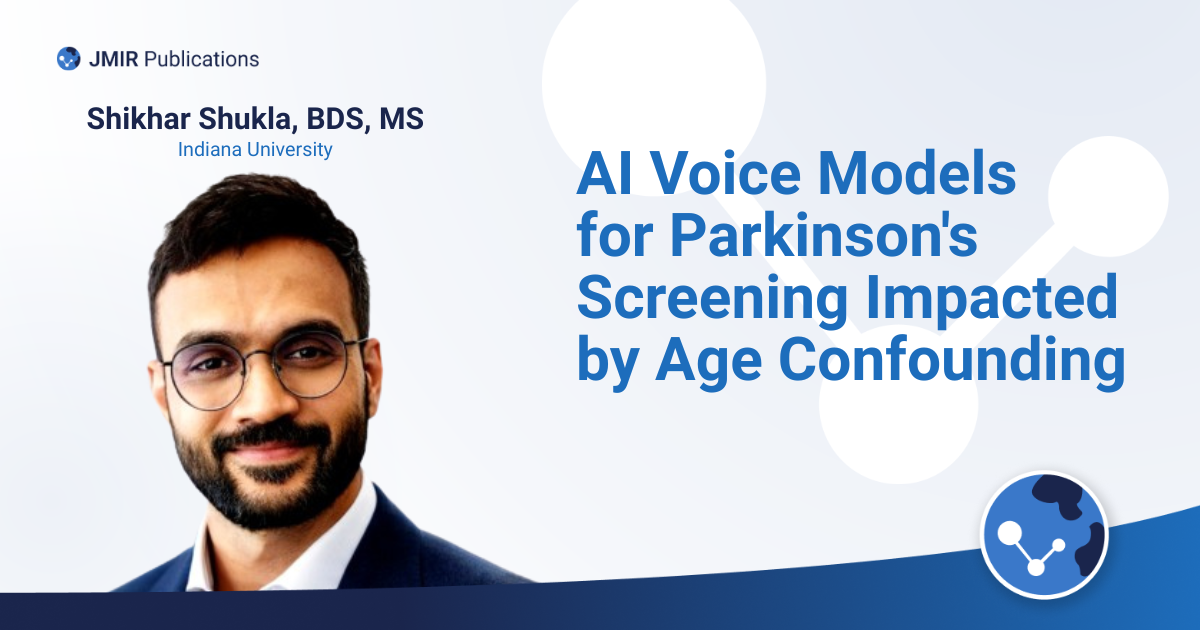
Voice-based artificial intelligence models have generated significant interest for noninvasive screening of neurological conditions like Parkinson's disease and dementia. However, high classification performance in these models may be driven by age differences between study groups rather than true disease signatures.
Key Takeaways |
|
Age Masked as Performance: Age alone predicted Parkinson's status better than an 86.4M-parameter AI model (AUC 0.875 vs 0.843), proving demographic gaps create massive statistical shortcuts. |
|
True Signal Is Weaker: In age-restricted evaluation (60–80 years), age-only accuracy fell to chance while the AI model retained an AUC of 0.787, confirming a real but far weaker disease-specific vocal signal. |
|
Brittle Feature Extraction: Models trained on single feature pipelines degraded sharply when tested across preprocessing versions (AUC dropped to 0.618), highlighting vulnerability to technical shifts. |
In a methodological evaluation published in the Journal of Medical Internet Research, lead researcher Shikhar Shukla and colleagues at Indiana University and Emory University audited the Bridge to Artificial Intelligence (Bridge2AI) Voice Dataset v3.0.0 to quantify how demographic imbalances affect deep learning models trained on vocal biomarkers.
Auditing Bias in AI Voice Biomarkers
How reliably can deep learning models distinguish pathological voice changes from normal vocal aging? Because speech characteristics naturally alter with age, comparing older disease cases against younger control groups creates a statistical shortcut that models can exploit.
By applying age-restricted evaluations, site controls, and propensity-score matching, the research team demonstrated that while a disease-specific acoustic signal exists, true model performance is significantly lower than unadjusted full-cohort metrics suggest.
Discover how rigorous demographic controls and reporting standards impact digital health AI evaluations:
-
Read the Full Open-Access Article to explore the complete statistical auditing, spectrotemporal analysis, and proposed reporting standards.
-
Watch the Author Video to hear the research team discuss demographic confounding and voice biomarker evaluation.
| In this video, Shikhar Shukla from Indiana University presents a methodological audit of the Bridge2AI Voice Dataset v3.0.0, evaluating voice-based AI models for Parkinson disease and dementia screening. |
In the Author's Words
"Before these tools reach a clinic, we need to know they are hearing the disease and not just hearing age."
— Shikhar Shukla, BDS, MS (Indiana University)
Shukla S, Naliyatthaliyazchayil P, Gichoya J, Purkayastha S
Demographic Confounding in Voice-Based Parkinson Disease Screening: Methodological Analysis of the Bridge2AI Voice Dataset
J Med Internet Res 2026;28:e95609
URL: https://www.jmir.org/2026/1/e95609
DOI: 10.2196/95609
JMIR Publications is thrilled to announce that the JMIR Aging team will be attending the Gerontological Society of America (GSA) Annual Scientific Meeting this November 4-7, 2026 in National Harbor, MD for the very first time!
If you'll be at GSA, we would love to connect in person. Drop by booth 214 to meet us, discuss your upcoming research, or learn more about publishing open-access with JMIR Aging.